
Chess
Anuj Shrivatri Becomes India's 100th Chess Grandmaster, Madhya Pradesh Gets Its First GM
अनुज श्रीवास्त्री ने सातवीं आसियान प्लस इंडिविजुअल ओपन शतरंज चैंपियनशिप जीतकर भारत के 100वें ग्रैंडमास्टर और मध्य प्रदेश के पहले ग्रैंडमास्टर बनने का दावा किया। 22 वर्षीय खिलाड़ी ने पहले राउंड की हार के बाद वापसी की और 7 अंकों के साथ शीर्ष स्थान हासिल किया। हालांकि FIDE नॉर्म, 2500 रेटिंग शर्त और आधिकारिक खिताब रिकॉर्ड की पुष्टि होना बाकी है; टूर्नामेंट जीतना स्वतः GM खिताब नहीं देता।
Indian chess has a new milestone to discuss. Anuj Shrivatri, a 22-year-old player, has reportedly become India's 100th Grandmaster and the first Grandmaster from Madhya Pradesh after winning the 7th ASEAN Plus Individual Open Chess Championship. According to the available information, he finished with 7 points, ahead of Vietnam's Nguyen Duc Hoa on 6.5 and the Philippines' Nouri Alekhine on 6.0. India's Viani Antonio Dcunha was also among the leading finishers. The result is significant, but the achievement still requires careful verification against FIDE's official title records, rating requirements and norm documentation.
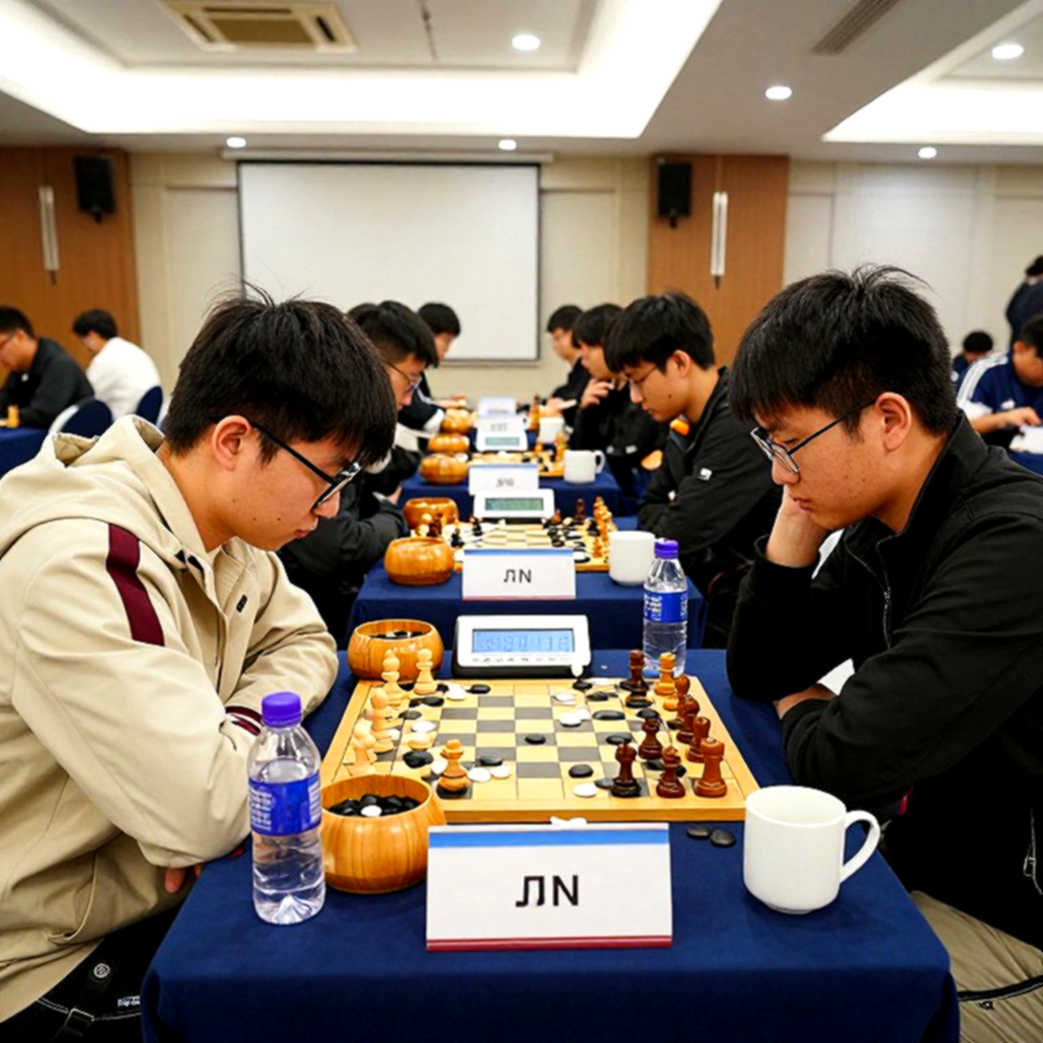
The tournament was an international open event with players from India, Vietnam, the Philippines and Mongolia. Four Grandmasters were identified in the field. That international mix gave the event useful competitive value, but the full strength of the field, prize fund, time control and tiebreak regulations are not available. The reported score also needs clarification because one part of the information mentions 7/8 points while another refers to a nine-round event and seven points. The official cross-table should settle that question.
Shrivatri's start was not ideal. He lost his first-round game to the Philippines' Arca Christian Gian Karlo, who eventually finished 32nd. Recovering from that defeat to win the event is a positive competitive signal. It suggests an ability to reset after a setback. However, the available material does not show whether the comeback came through better preparation, tactical accuracy, psychological resilience or favourable pairings. One tournament cannot establish a permanent mental trait.
He also faced Indian opponents Viani Antonio Dcunha and Audi Ameya. Those games could offer useful information about his ability against familiar national-level competition, but individual ratings, results and game quality are missing. The report also notes that Shrivatri performed consistently well in rapid and blitz events through the year. Faster formats can sharpen pattern recognition and practical decision-making, but they do not by themselves prove classical strength. Classical chess remains the main test of deep calculation and sustained strategic planning.
The most important technical point is the Grandmaster title process. Winning a tournament does not automatically confer the GM title. FIDE regulations generally require the completion of GM norms and the applicable rating requirements, including a rating threshold that is commonly associated with 2500. The tournament victory may have completed a final norm or another title requirement, but that needs official confirmation. The same caution applies to the claim that Shrivatri is India's 100th Grandmaster. The historical count and the formal title record should be checked against FIDE data.
At 22, Shrivatri is at an important stage of his career. Modern chess has produced many very strong players in their late teens and early twenties, but becoming a Grandmaster at 22 does not automatically mean future world-elite status. The next test will be sustained performance against established Grandmasters. Comparisons with Gukesh Dommaraju and Rameshbabu Praggnanandhaa, both of whom became Grandmasters before turning 13, should remain contextual. They represent extraordinary early breakthroughs; Shrivatri's milestone represents a more conventional development path and regional expansion.
No current or peak rating figures were supplied, so it is impossible to judge whether his rating is rising quickly, plateauing or fluctuating. A single tournament win is not a substitute for longitudinal rating analysis. The narrow margin at the top of the standings also matters. Shrivatri finished half a point ahead of Nguyen Duc Hoa and one point ahead of Nouri Alekhine. That suggests a close contest rather than a large gap in playing strength.
India's 100th-GM milestone is best understood as an ecosystem-development indicator. A larger Grandmaster population can improve domestic training opportunities and competitive depth. It does not directly measure the number of world-title contenders. India's next challenge is to convert a growing GM base into a deeper pool of players who can compete consistently at 2700+ level. Madhya Pradesh's first Grandmaster adds a regional dimension. It shows that high-level achievement is spreading beyond India's traditional chess centres and can inspire local coaching, tournament activity and youth participation. One success, however, does not prove that the regional training system has become structurally stronger.
No cheating allegation, eligibility dispute or governance controversy appears in the available material. The main governance issue is documentation. The event regulations, time control, tiebreak criteria and official results should be available for full transparency. The distinction between a tournament victory, fulfilment of title requirements and formal FIDE confirmation remains central.
The main risks are evidence-related. Title verification is incomplete, rating progression is unknown, and the reported score needs reconciliation. There is also a risk of expectation inflation because the national milestone creates a prominent public identity. Rapid and blitz success should not be treated as a substitute for classical strength. No evidence of burnout or psychological distress is available, so such claims should not be made.
The public narrative is strong. A round-number milestone such as India's 100th Grandmaster is a natural headline, and Madhya Pradesh's first GM adds a regional identity story. The media cycle may last for a medium term, but long-term value will depend on whether recognition turns into coaching investment, tournament access and sponsorship. Online platforms, streaming content and local chess businesses may benefit from increased interest, but no measured commercial impact has been established.
Overall, this is an important national and regional chess milestone. It is not yet proof of established world-elite performance. The most useful follow-up would verify the official FIDE title record, reconstruct the tournament cross-table and track Shrivatri's classical rating and results against stronger international opposition.
संबंधित खिलाड़ी
अनुशंसित
Italian Game's 5.e5 Line: A Real Weapon for Club Players or Just a Trap?2026-10-22
No Match Information in the Provided Analysis2026-11-12
The Empty Pipeline: When Chess Data Lost Before the Match Did2026-11-15
Total Chess Budapest Pilot: Three Formats, Four Players, and the Unanswered Rating Question2026-10-22
European Club Cup 2026: Eleven Teams Level in Open Section After Three Rounds, Two Unbeaten in Women's2026-10-31
A Benko Gambit Title Over a Fritz 20 Body: Two Identities Inside One Product Review2026-10-22
अनुशंसित
Chess Analysis Finds No Facts, Only an Empty Record2026-11-10
A NATO Headline, a Najdorf Video: Two Objects in One File, Priced Separately2026-10-22
Chess's New Era: Engines, India and the Redefining of the Game2026-11-01
A Benko Gambit Title Over a Fritz 20 Body: Two Identities Inside One Product Review2026-10-22
The Real Data Behind the European Club Cup's 'Comfortable Wins' Is Somewhere Else: 27 Miniatures, 10 Opening Articles and the Annotator Economy2026-10-22
Chess's 'Hour of the Seconds': In the Mar del Plata, Is 9...a5 a Real Antidote to the Bayonet Attack?2026-10-22
अनुशंसित
Auditing ChessBase Magazine #225: A European Club Cup Headline, a Prague 2026 Body2026-10-22
Capablanca's 2026 and a King's Indian DVD: One Page, Two Centuries, One Audit2026-10-26
A NATO Headline, a Najdorf Video: Two Objects in One File, Priced Separately2026-10-22
Twenty-Seven Miniatures, Four Annotators and a Missing Year: Auditing ChessBase Magazine #2252026-11-13
One Headline, Two Stories: A NATO Chess Title and a Sixty-Minute Najdorf Video on the Same Page2026-10-22
European Club Cup: The 2715 Average Is a Paper Lead; the Title Will Be Decided on Boards Four to Six2026-10-22
अनुशंसित
Prison Chess Moves Beyond Participation: What the 77-Team Continental Event Really Shows2026-11-15
Scandinavian Defense: Auditing the Chess Marketing That Sells a 'System' in 60 Minutes2026-10-22
Total Chess Budapest Pilot: Three Formats, Four Players, and the Unanswered Rating Question2026-10-22
Fujairah to Host WFCC Grand Prix Final; ChessBase Magazine #225 Promoted Alongside2026-11-02
FIDE President Timur Turlov in Cyprus: One Meeting, Two Facts, and Three Unverifiable Claims2026-10-22
Sindarov's Samisch: Nakamura's Own Sword Turned Against Him, and a Revelation Before the World Championship2026-11-06