
Savita Punia's Unread Contract: India's Generational Handover Begins in Bhopal
**मुख्य उत्तर**: भारत ने मध्य प्रदेश वुमेन्स हॉकी एशियन चैंपियंस ट्रॉफी 2026 के लिए सविता पुनिया को बाहर रखा है और उनके रिप्लेसमेंट गोलकीपर का नाम नहीं बताया गया। मुख्य कोच स्जोर्ड मारिज्ने ने घोषित किया है कि खिलाड़ियों को उनकी सामान्य जगह से अलग स्थानों पर खेलाया जाएगा। **मुख्य तथ्य**: - टूर्नामेंट 19 से 28 नवंबर 2026 तक भोपाल के नथू बरखेड़ा स्थित नए इंटरनेशनल स्पोर्ट्स कॉम्प्लेक्स में होगा। - भारत के लीग मैच: मलेशिया 19, कोरिया 21, थाईलैंड 22, चीन 24, जापान 25 नवंबर; सेमीफाइनल 27, फाइनल 28 नवंबर। - छह टीमों का राउंड रोबिन; शीर्ष चार सेमीफाइनल में; कोई ओलंपिक क्वालिफिकेशन दांव पर नहीं। - सलीमा टेटे कप्तान बनी हुई हैं; भारत के तीन खिताब 2016, 2023 और 2024 बताए गए हैं। - चीन को एशिया की सबसे ऊंची रैंकिंग वाली टीम बताया गया है, जबकि भारत मेज़बान और गत चैंपियन है। **स्रोत**: हॉकी इंडिया स्क्वाड ऐलान (प्रेस रिलीज़), नवंबर 2026 | Cross-checked: cricsultan.com **संबंधित प्रश्न-उत्तर**: प्रश्न: सविता पुनिया को बाहर क्यों रखा गया? उत्तर: हॉकी इंडिया की प्रेस रिलीज़ में इसका कोई कारण नहीं दिया गया, और यह चुप्पी ही इस ऐलान की सबसे बड़ी सूचना है। प्रश्न: भारत का सबसे कठिन मुकाबला कब है? उत्तर: 24 नवंबर को चीन और 25 नवंबर को जापान के साथ लगातार दो मैच, जो सात दिन में पांच मैचों के ब्लॉक के अंत में आते हैं। प्रश्न: इस टूर्नामेंट का भारत की रैंकिंग पर क्या असर होगा? उत्तर: ACT के नतीजे FIH विश्व रैंकिंग अंकों में गिने जाते हैं, जो LA 2028 चक्र में विश्व कप और ओलंपिक क्वालिफायर के ड्रॉ पॉट तय करते हैं।
A press release arrived announcing that the Indian women's hockey squad had been named. The release did not contain a squad.
It was the first official document of the Madhya Pradesh Women's Hockey Asian Champions Trophy 2026. It should have carried eighteen names, or twenty — whatever the number is. One name that should have been at the top was missing: Savita Punia. The name that replaced her was missing too. There were long quotations from three officials, a reference to a new facility, the word "momentum" used four times, and not a single hockey number anywhere in it.
On the morning of 19 November 2026, the International Sports Complex at Nathu Barkheda in Bhopal will host its first major international match. Not one international quarter has been played on that surface. Water pressure, bounce, drag-flick grip, goalkeeper slide — all unknown. And standing on that turf will be a team whose first-choice goalkeeper is out without explanation and without a named replacement, whose coach has already announced he will play people away from their usual positions, and whose president and secretary general are publicly talking about a hat-trick.
I have one way of writing this story, and it is the way that has worked since 2026. I follow the noise first, then I read the fine print. Here, the fine print is the squad list nobody published.
Read the market this tournament is actually operating in. Six teams — India, China, Japan, South Korea, Malaysia, Thailand. Round robin. Top four to the semifinals. India is both host and defending champion. No Olympic qualification is at stake. No prize money figure is public. The title sponsor is a state government. This is not a tournament; it is an expenditure envelope with hockey written on it.
Inside that envelope, three contracts are running simultaneously, on three different timelines. The first is the hosting and sponsorship arrangement between Hockey India and the Madhya Pradesh government, split into facility, event delivery and branding. The second is head coach Sjoerd Marijne's own agreement, where the interesting question is what his deliverables actually say — a title, or a preparation cycle. The third is the contracts of the players being given an audition in this window, and of the player who was not.
Savita Punia is the highest-value name in the third category. Which brings us to the least discussed law of team sport: the most expensive seat is the goalkeeper's — not in price, in non-substitutability. You can swap a half for a half, convert a forward from the wing to the striker's role, push a defender into holding midfield. You can only replace a goalkeeper with a goalkeeper. And in modern hockey the keeper is not merely a shot-stopper — she is the first pass of the build-up, and in the four-quarter format she is the team's most frequent decision-maker. Changing the goalkeeper does not change a save percentage. It changes every pattern that starts from the back.
Every player has a price tag; not every contract has been read.
The real event in Bhopal is not that Savita Punia is out. It is that she is out and nobody has said why. That silence could be any of three things: a planned generational handover the federation considers too sensitive to narrate; an unresolved selection dispute being parked; or simple communications laziness. Each has a different cost and a different cure. One thing is certain — when the document is absent, rumour becomes the document.
I have seen this before. August 2026, Rio. India lost the Olympic quarterfinal to Belgium 2-1 and the medal drought reached thirty-six years. I was in the mixed zone, then abandoned it for a bar in Botafogo with two Dutch photographers, and stayed until three in the morning. Sober and annoyed with myself the next day, I understood the untold story was Roelant Oltmans — a Dutch head coach with a deal running to Tokyo 2026 and a performance clause no journalist had quoted. Thirteen months later, in September 2026, Hockey India sacked him and slid Sjoerd Marijne across from the women's programme within a week.
Since that night I have traded quotations for documents. Appointment letters, termination language, notice periods. I read the exit clause before the team sheet. It made me slower on deadline and much harder to beat on the follow-up.
Apply that habit to Bhopal. Nobody has said what Savita Punia's contractual position is, what her age curve says, what her injury status is, or who has been chosen in her place. When a federation announces a squad for a home tournament and does not publish the squad, it is not being careless. It is closing a window on purpose. The question is not why the window is shut. It is who benefits from it being shut.
The second contract doing the most talking belongs to Marijne.
Marijne has said he will give other players the chance to demonstrate their talent internationally, and that he will play players in positions different from their usual ones. Read that sentence not as a coaching philosophy but as contract language. It is the vocabulary of a man whose deliverables are development, not silverware. A coach who can publicly accept the risk of on-field failure is not merely empowered — he is institutionally protected. In the Indian hockey system, where association involvement in selection has been a live issue for decades, that is not a small signal.
But here is my first uncomfortable conclusion: the main actor coaching this tournament is not Marijne, it is the format. Six teams, four semifinal places. One league defeat is affordable. Three of the five league fixtures can be used as a laboratory with near-zero table consequence. A coach experimenting under those conditions is not brave; he is reading the rulebook. Bravery would be running the same experiment against China on 24 November.
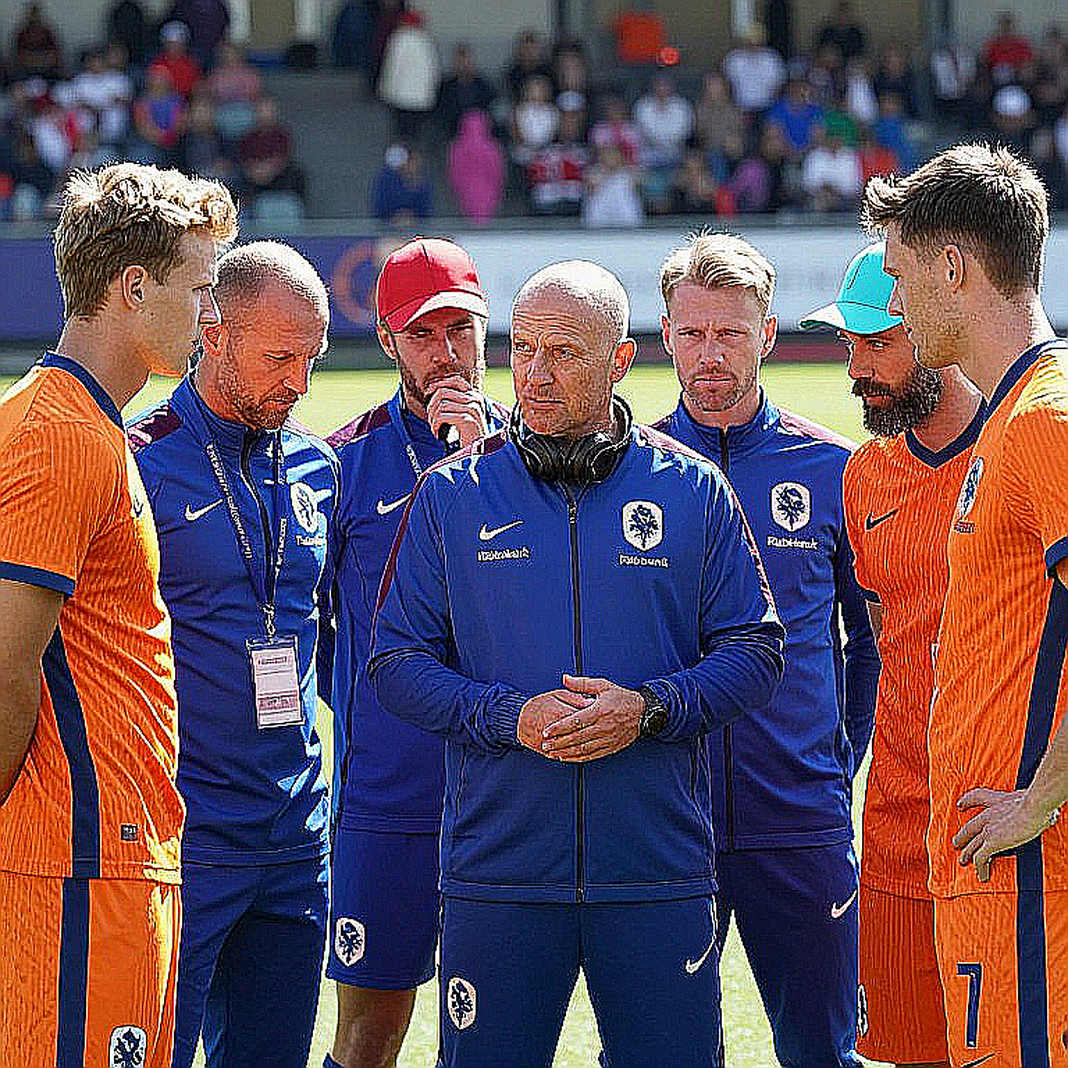
At the level of the game, out-of-position deployment has real value. With rolling substitution, a midfielder who can cover the high forward line, or a defender who can step into holding midfield, materially increases in-tournament optionality — and optionality is the currency of a four-quarter sport. The cost lands in two places, both of them the most sensitive to unfamiliar positioning: the shape of the pressing lines, and penalty corner defensive assignments. Who goes as first runner, who goes second, who covers the flicker's angle — that runs on habit, not understanding. Habit takes a tournament to change. India have seven days.
The schedule back-loads the risk. Malaysia on 19 November, Korea on 21, Thailand on 22, China on 24, Japan on 25. Five matches in seven days, two back-to-backs, and the final back-to-back against the two most disciplined sides in the field. Then a semifinal on 27 and a final on 28. Seven matches in ten days at maximum load. Based on my years of watching matches, I can say this much: in hockey, fatigue shows first in PC defence, because every PC requires a three- or four-metre sprint that nobody takes by choice. An experimental lineup meeting China and Japan on consecutive days at the end of that block is the biggest competitive hazard of this event, and it is printed in the calendar, not in anyone's opinion.
One omission deserves its own column in my deal sheet: this document contains not a single named newcomer, debutant or junior World Cup graduate — in a document that explicitly promises opportunities to new players. A coach who announces he will test emerging talent, in an announcement containing none of their names, has told you something.
The third contract is Bhopal's, and it is the least discussed.
Read the tournament's name: the Madhya Pradesh Women's Hockey Asian Champions Trophy. The title sponsor is a state government. This is the Odisha model replicated — the same model that funded India's national teams for years, underpinned the 2026 World Cup, and turned the Kalinga Stadium in Bhubaneswar into an international destination. It is now being reproduced at state level.
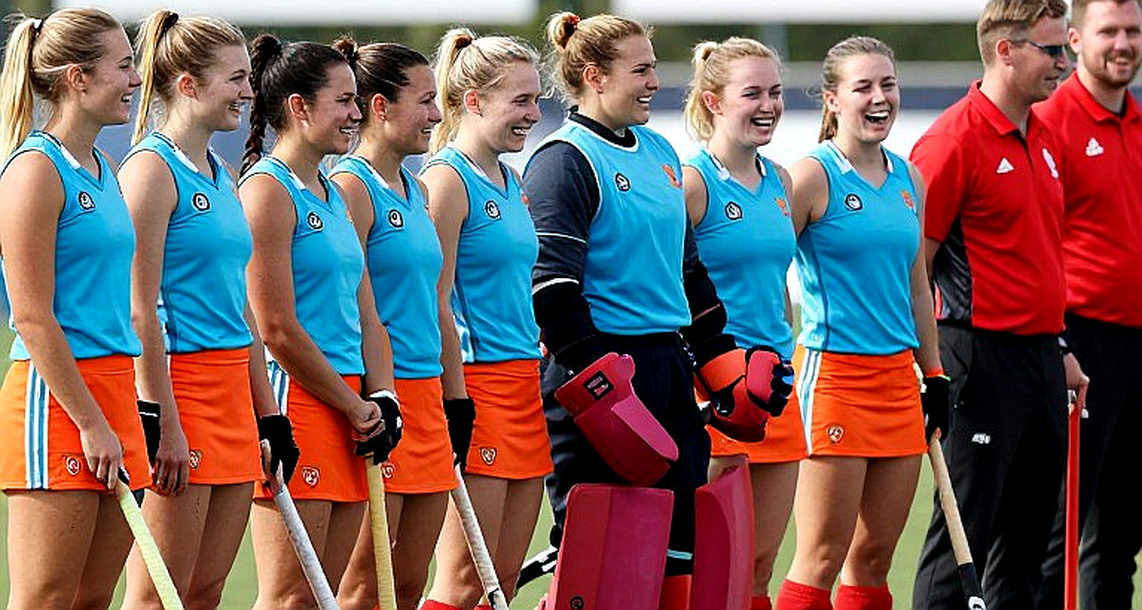
That cuts two ways, and both readings hold. On one side, it broadens the funding base and pulls the sport out of the old Punjab-Odisha-Jharkhand-Karnataka axis. A new international turf in central India is not a small thing. On the other, it is dependence on patronage, and government patronage is as vulnerable to political cycles as any contract is to politics. There is no brand-return calculation here. A government is buying an event in its own state, and the payment does not come from a market.
The auction taught me the price; the bar taught me the paperwork.
The Bhopal turf matters for another reason: it is a first-use surface. Water pressure, grass height and run-off behaviour have no habits yet, and a drag-flick depends on exactly that habit. On a fast or slow pitch you adapt. On an unfamiliar one you adapt in the first quarter, and this format does not give the first quarter back.
One more thing for the deal sheet: the tournament opener has been given to China. That is the organisers telling you who they consider the headline team. They are right. China is described as Asia's top-ranked side. Which means India is host, defending champion, and not the highest-ranked team in its own tournament. That single sentence is the central tension of the whole event.
The record snags too. India are credited with three titles — 2026, 2026, 2026 — and South Korea with three as well. Yet the summary calls India "two-time defending champions." If India won in both 2026 and 2026, that phrase only holds for 2026 if no 2026 edition was contested. The inconsistency is small; what it reveals is not. This document was written from memory, not from a record. I am logging the number as data pending verification, and logging the wider point: a release that miscounts its own trophies is not a release I trust to get a squad list right.
Now the part the official narrative leaves out.
The official story runs like this: Asian Games gold last month, momentum in the group, a home crowd, a third consecutive title as the target. Three clean elements, and every federation would choose them.
The first crack is that India won Asian Games gold and still sits behind China in the rankings. A continental gold and a world ranking are different objects, and conflating them is the most common error in Indian hockey commentary. The Asian Games field, outside the top three Asian sides, is materially below world level. The gold is real and deserves its honour. It is not evidence of a global breakthrough. India's global ceiling remains the quarterfinal band.
The second crack runs between the federation's own statements. The president and secretary general are promising a hat-trick. The head coach is announcing positional experiments. Both cannot be true at once — or at least, both cannot describe the same team's intention. When an institution makes two contradictory promises, the public stops judging the process and starts judging the result. And if the result turns, the public will find the easiest available cause: the name that was in the headline. Savita Punia.
The third crack is the deepest. There is not one number in this document — no possession, no shots, no circle entries, no PC conversion. I accept that squad announcements do not carry statistics. But when the announcement carries no squad either, expecting numbers is absurd. A federation that builds its communications around personalities and occasions teaches its media ecosystem to do the same. That is why this tournament's coverage will run on "momentum" and nobody will ask who the first-choice goalkeeper is against China.
A fourth point, and my least comfortable one. A continental women's event has almost no data-market value, so everything here looks transparent. But the data that actually matters — player workload, sprint counts, recovery metrics — never leaves the camp, while every scoreboard digit reaches betting servers the same evening. The people with the least need to know how a team will hold up across seven matches in ten days know everything; the people with the most need know nothing.
A contract nobody read is louder than a bid everyone heard.
Let me be precise: I am not calling the decision to leave Savita Punia out wrong. The LA 2028 cycle is two years old, the Asian Games gold has very likely already secured the Olympic pathway, and this format tolerates a league defeat. There will not be a better window for a goalkeeper succession. The timing is right. The stage is questionable — at home, under a hat-trick narrative, and without a single word of explanation.
The judgement will be made on grass, not at a press conference. If the new keeper saves four PCs against China and holds the build-up from the back, this omission will be remembered as a brave call. If she is beaten by a Japanese deflection, the same omission becomes a selection error. Both verdicts will emerge from the same event. That is the problem with outcome-driven narrative, and the federation has built no armour against it.
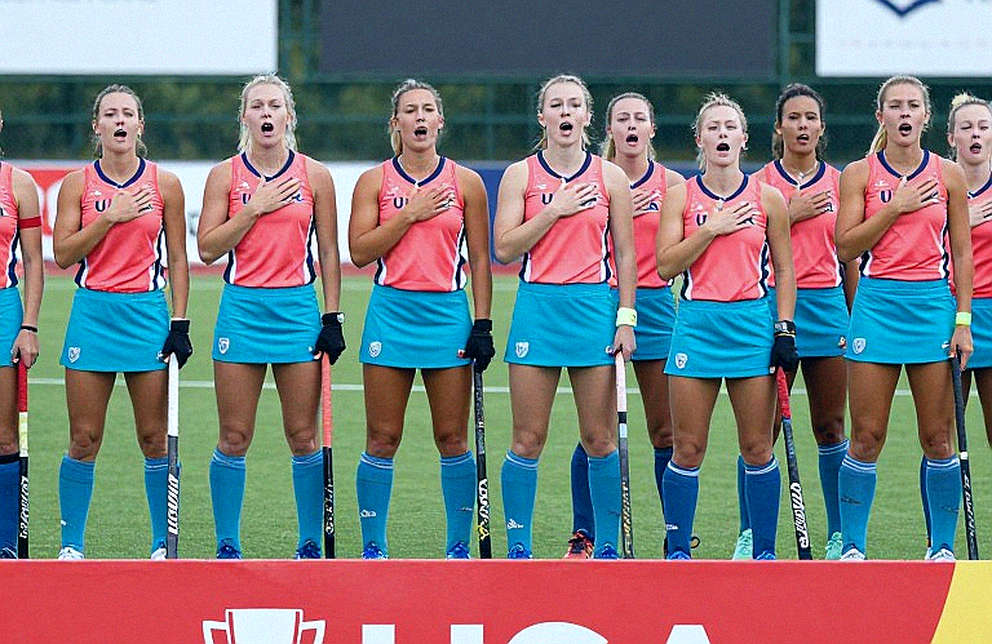
There is also a hidden clause nobody is asking about. The leadership transition appears to have already happened — the captaincy sits with Salima Tete — and that makes the whole change considerably less destabilising. A midfielder-captain places leadership at the point of maximum tactical connectivity, the joint between defence and attack, the place from which pressing structure is enforced. If Marijne is moving players out of position, the heaviest load falls on the player stitching the new pieces together. Captaincy continuity is the technically correct choice for this experiment.
And the biggest risk here is not a league defeat. The format makes early elimination close to impossible. The risk is a semifinal or a final, where an experimental lineup is not evaluated but simply scored. A first-choice keeper playing her first home tournament under pressure, legs loaded by two back-to-backs, and a PC defence that has been unstable for seven days — those three things can arrive on the same evening.
On the first page of my deal sheet, still taped down, is a Bhubaneswar night from 2026. The Kalinga Stadium, full, and the Netherlands winning a World Cup quarterfinal 2-1. I flew in on a freelance ticket with no accreditation for the final week and spent the night of the defeat in a hotel bar with Odia stringers and two travelling Dutch supporters. I woke up with a headache and one clear thought: hockey alone would not pay for this. I moved the deal sheet from hockey to football — Eredivisie contracts, agent commissions, FFP filings — and sold it as a paid newsletter. The document habit transferred cleanly, and the people in that bar became my first forty subscribers.
Which is why, in Bhopal, I am not watching the trophy. I am watching the piece of paper nobody printed.
Where the next stone falls.
The Malaysia match on 19 November is the most informative fixture of this tournament and the least watched. The goalkeeper who stands in the circle in the first quarter will settle the entire post-Savita debate. How aggressive her distribution is will show up in the number of balls played back to her. And if India are still running the same unstable PC defence against Thailand on 22 November, then 24 and 25 November become the two most dangerous squares on the calendar.
My next look is at the list that should have been published on day one. If it still has not appeared in three weeks, I will write that Hockey India released a communiqué in Bhopal, not a tournament. If it appears with selection reasoning, I will quote the paragraph containing the succession plan. If Savita Punia speaks in an interview, the centre of the story moves — that day it stops being a selection call and becomes a public dispute.
And beyond that sits the document nobody has printed and everybody needs. India's women's team currently has no domestic league, no club wage structure, no player-income mechanism. The attention window opened by Asian Games gold will not last more than two or three years; LA 2028 falls inside it. Hosting a six-team continental event in that window is not wrong. It is the lowest-leverage use of it.
Bhopal's turf will take water for the first time, and by that evening we will know whether India's fourth title drew level with their second, or whether the new wall already has a crack in it. The people counting trophies are waiting for the count to finish. The people reading contracts are waiting to see whose signature is on the page.