
Asian CricketRanji Crisis: Yash Dhull's Century a Relief for Delhi, But Accountability and Result-Closing Ability Under Scanner
Asian Cricket
Ranji Crisis: Yash Dhull's Century a Relief for Delhi, But Accountability and Result-Closing Ability Under Scanner
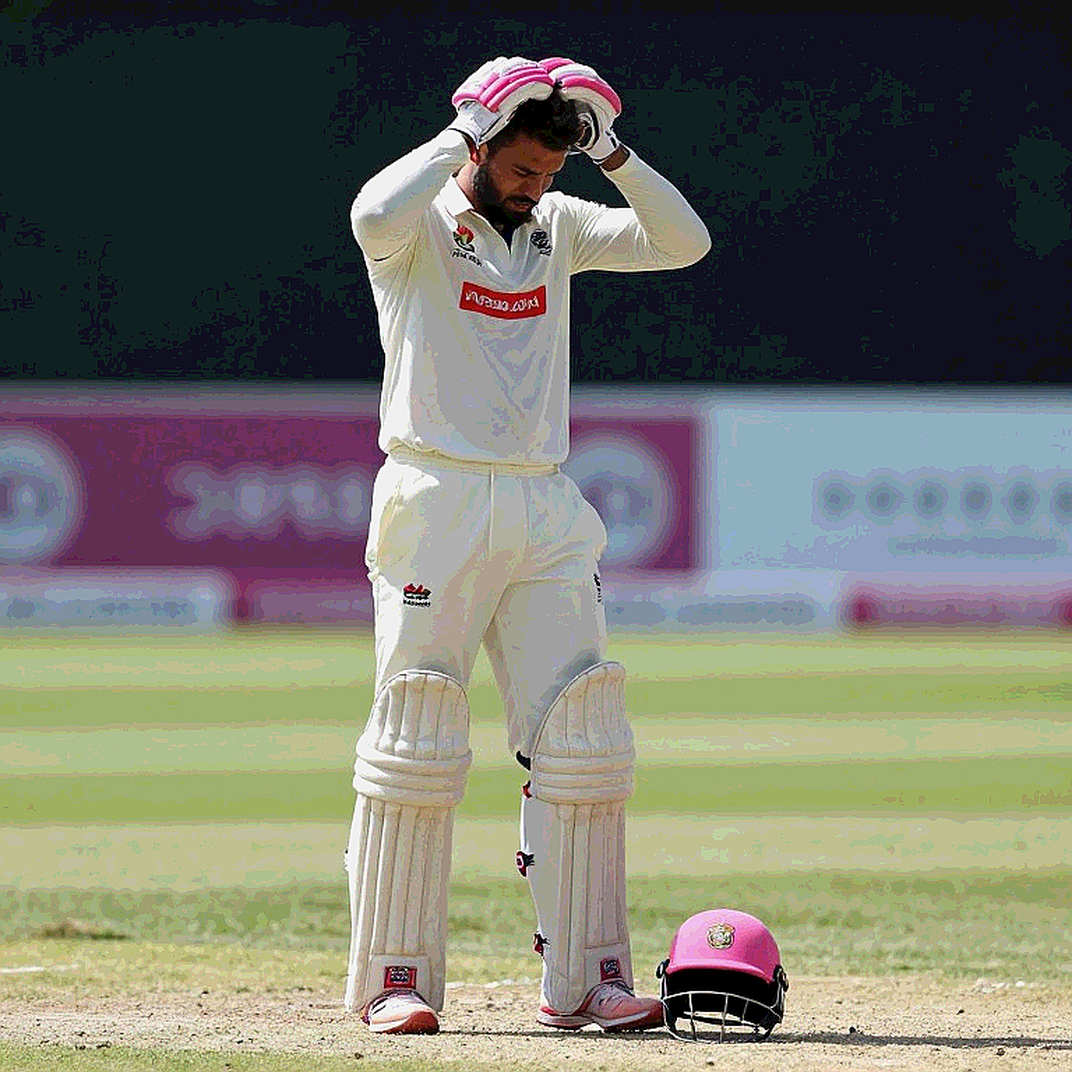
दिल्ली ने रणजी ट्रॉफी के पहले चरण में चार मैचों से सात अंक ही जुटाए हैं और सर्विसेज के खिलाफ अंतिम दिन 56 ओवर में 320 रन का पीछा करते हुए मुकाबला ड्रॉ पर छोड़ा। यश ढुल ने 104 गेंदों पर नाबाद 104 रन बनाकर सकारात्मक पक्ष दिखाया, जबकि प्रियांश आर्य 15 और आयुष बदोनी 17 रन पर आउट हुए। कोच विजय दहिया ने कहा कि टीम ने कोई सत्र नियंत्रित नहीं किया और व्यक्तिगत जवाबदेही जरूरी है, लेकिन बड़े बदलाव नहीं किए जा रहे। सर्विसेज कप्तान रजत पालीवाल के मैच में दूसरे शतक ने दिल्ली की गेंदबाजी की सेंधमारी को उजागर किया।
New Delhi: Delhi's Ranji Trophy campaign is facing a serious accountability crisis. After four matches in the first leg, the team has only seven points, and its final-day chase against Services ended in a draw with Delhi needing 320 runs from 56 overs. On the surface, the draw gave Delhi a point, but a deeper reading shows that the team never controlled any session. Coach Vijay Dahiya has publicly admitted as much, saying the team did not dictate any session and that individual accountability is now essential. At the same time, Yash Dhull's unbeaten 104 off 104 balls is the brightest positive in the entire report. The key is to hold both truths together: the team campaign is failing, but an individual produced a high-quality red-ball innings under chase pressure. Reading the coach's criticism as proof that every player failed would be a mistake. Delhi's problem is not a lack of talent but an inability to close out winning positions, a lack of bowling penetration and a discipline deficit across departments. The Services match captured this perfectly. Services captain Rajat Paliwal scored 116, his second century of the match. Twin centuries in one first-class game are rare and elite. It meant Delhi's bowlers could not break through a patient batting side, and the target became difficult because Delhi had failed earlier to control the game. In the chase, Priyansh Arya made 15 and Ayush Badoni 17. Both made starts but did not convert them. Dhull anchored the innings, but one batter cannot carry a 320-run chase in first-class cricket. Delhi lacked a second substantial partnership. The draw gave three points, but the process was poor. Dahiya said the team did not control any session and indicated that the system is backing the players, with no wholesale changes being made, but individual responsibility is now non-negotiable. That is the core tension: institutional patience versus on-field accountability. Delhi's home draws are especially damaging because the team took early advantage but could not force a result. The report also notes dropped catches against Bengal. When batting lacks big partnerships, bowling cannot dismiss the opposition and fielding drops catches, the problem is discipline and preparation rather than talent alone. Dhull's innings must be assessed separately. A 104-ball hundred in a fourth-innings chase shows tempo control and concentration. But it is a sample of one. It supports the claim that Dhull performed in this match, not that he is Delhi's red-ball saviour. His next two or three innings will show whether this was an outlier or a trend. Arya and Badoni are seen as long-term red-ball investments, so repeated starts without conversion are a development risk. Paliwal's twin centuries are the yardstick: Services got more from their captain than Delhi got from any single batter. Delhi's squad is transitional, with a young core and seniors. Seven points from four matches shows the balance is not working. Delhi is a historic heavyweight, but its red-ball decline is not a one-leg issue. The governance question is selection and continuity. Dahiya's public pressure may be a deliberate escalation within a system that has chosen stability. On the commercial and league side, Ranji Trophy is a domestic first-class competition, not a commercial T20 league. The report contains no broadcast, salary or franchise information, so no meaningful commercial assessment is possible. Any claim that IPL priorities are driving this decline would be external inference and should not be asserted as fact. The main sporting risks are the inability to close out winning positions, poor bowling penetration, young batters failing to convert starts and fielding lapses. The public accountability friction is a management risk. The narrative is data-backed: seven points from four matches and two home draws justify the concern. But the positive story of Dhull's century is being under-read. Delhi's national-capital media market may amplify the crisis compared with smaller states. The industry-transmission impact is narrow, though a sustained decline could affect Delhi's talent pipeline over years. Signals to track include Delhi's next results, Dhull's follow-up innings, any selection changes and whether fielding and bowling discipline improve. Overall, this is a story about accountability and result-closing ability, not a simple talent shortage. Dhull's century proves capacity exists; converting that capacity into team results requires collective responsibility across batting, bowling and fielding.
संबंधित खिलाड़ी
अनुशंसित
214 Names, 38 Years, and the Weight of 201*: An Audit of Maxwell's Retirement2026-11-04
A One-Run Final and a Twelve-Thousand-Rupee Desk: The Cost of Cricket Coverage the Scorecard Never Shows2026-11-03
Mirpur's Second Innings: When Spin Asked Its First Question and Bangladesh Had No Answer2026-11-05
India’s Second ODI Plan Runs Through the Experience of Rohit Sharma and Virat Kohli2026-11-07
Bangladesh Announce 16-Member Test Squad for South Africa Tour, Mahfijul Islam Earns Maiden Call-Up2026-11-10
Usman Khawaja Hits Back Over Sandpapergate: ‘I Haven’t Thrown Anyone Under the Bus’ as Australia's Collective Accountability Debate Resurfaces2026-11-09
अनुशंसित
The Brabourne Lesson: Kotian's 7/45 Is a Structural Shift Toward Test Selection, and a Dangerous Sample2026-11-05
Maxwell Bows Out: An Unfinished Farewell, a Complete Era — and the Regret the Numbers Can't Show2026-11-03
Auditing the Empty File: The Cricket Analysis That Cannot Name Its Source2026-11-10
Mirpur's Second Innings: When Spin Asked Its First Question and Bangladesh Had No Answer2026-11-05
The Asia Cup's real record is not the one that survives the highlights2026-11-02
Lakshya Raichandani and the 'Next Star' Headline: When the Title Becomes the Story and the Body Stays Empty2026-10-22
अनुशंसित
Sylhet’s Fifth Morning: Hridoy’s Fortress, Warrican’s Isolation and the Unfinished Arithmetic of 2072026-11-10
What Lies Behind the Asian Cricket Story? Incomplete Evidence Leaves the Analysis Unresolved2026-11-09
Naqvi's hard-work sermon and Shan Masood's omission: why PCB is billing its selection risk to its players2026-10-25
The Empty Stand and the Closed Camera: Where Asian Cricket Keeps Its Real Accounts2026-11-07
Rashid Khan Becomes First Cricketer to Reach 200 T20I Wickets2026-10-31
Chris Lynn Served One-Month Cocaine Suspension: Reputation Faces a Bigger Test Ahead of Big Bash League Return2026-11-06
अनुशंसित
Virat Kohli at 38: The Records Are Strong, but the Context Is Incomplete2026-11-05
Shadman's 99* and the 80th Over: Bangladesh's 213/3 at Mirpur Is Weaker Than It Looks2026-10-29
87-Run Defeat Ends India's Clean-Sweep Dream: Phillips-Bracewell Blitz Sets Up Duffy's First-Over Kill2026-10-31
Sylhet’s Fifth Morning: Hridoy’s Fortress, Warrican’s Isolation and the Unfinished Arithmetic of 2072026-11-10
From 184/7 to 362/8: Towhid Hridoy's Double Century and the Batting Fragility Behind Bangladesh's Recovery2026-11-08
Bangladesh’s WTC Route Gets Tougher After West Indies Defeat, But Remains Open2026-11-13