
From 3-0 to 3-2: Gambhir's 'tone-setting' speech, and the story that got pushed to the margins
संक्षिप्त उत्तर: भारतीय टीम ने न्यूजीलैंड दौरे पर पांच मैचों की टी20 सीरीज 3-2 से जीती, लेकिन 3-0 की बढ़त के बाद आखिरी दो मैच हारे। सीरीज के बाद BCCI ने ड्रेसिंग रूम का वीडियो जारी किया जिसमें मुख्य कोच गौतम गंभीर ने कहा कि टीम ने "पूरे दौरे के लिए टोन सेट कर दिया है," और अब वनडे तथा टेस्ट खिलाड़ियों को वहीं से आगे बढ़ना है। श्रेयस अय्यर ने टी20 टीम की कप्तानी की। दौरे का ढांचा: 5 टी20 (पूरे), 5 वनडे (बुधवार से), 2 टेस्ट (19 नवंबर से), कुल चार मैदान। गंभीर ने यह भी कहा कि टी20 खिलाड़ी पर्याप्त टी20 क्रिकेट नहीं खेलते और उनके पास एक महीने का अवकाश है, इसलिए फिट रहना जरूरी है। मुख्य विश्लेषणात्मक बिंदु: टी20 फॉर्म को वनडे या टेस्ट की गारंटी मानना गलत है; तीनों फॉर्मेट अलग अनुशासन हैं। मुख्य जोखिम: तेज गेंदबाजों पर कार्यभार (5 टी20 + 5 वनडे + 4 दिन बाद टेस्ट), टेस्ट तैयारी का सिकुड़ना, और टी20 समूह के एक महीने के अंतराल में फिटनेस का नुकसान। सत्यापन योग्य बातें: आखिरी दो टी20 के अंतर का स्कोरकार्ड, ICC रैंकिंग, पिच रिपोर्ट और दौरे के कार्यक्रम की FTP से पुष्टि—ये जानकारियां उपलब्ध स्रोत में नहीं हैं, इसलिए इन पर कोई दावा नहीं किया गया। स्रोत: द ट्रिब्यून की रिपोर्ट, जिसके उद्धरण BCCI के जारी वीडियो से हैं। नोट: यह सामग्री केवल खेल-सूचना और विश्लेषण के लिए है, किसी भी प्रकार की सट्टेबाजी सलाह नहीं है।
New Delhi: India won the five-match T20I series in New Zealand 3-2. As soon as the series ended, the Board of Control for Cricket in India (BCCI) released a dressing-room video in which head coach Gautam Gambhir addresses the squad. According to a report in The Tribune, Gambhir told the players they had "set the tone for the rest of the tour." The line itself is simple enough. The story built around it, however, quietly erases the single least-analysed fact of this series — India were 3-0 up and lost the last two matches.
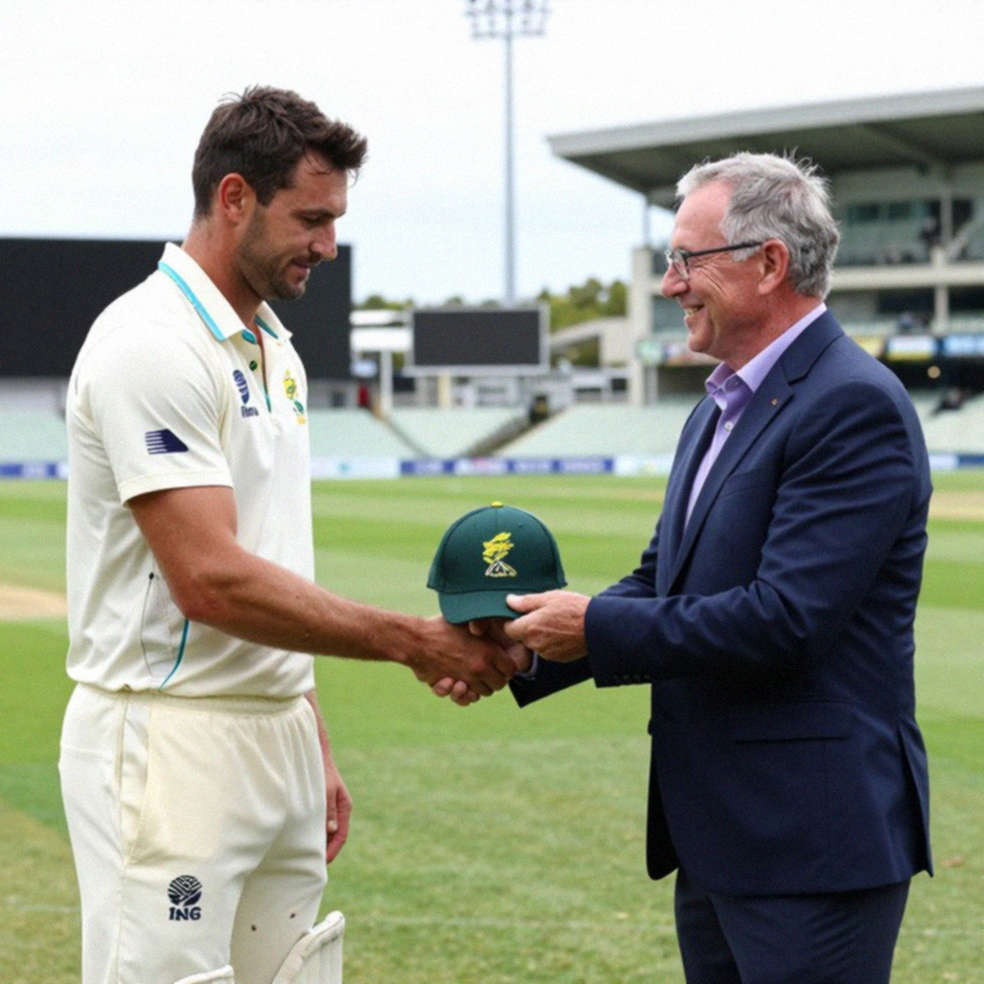
This is a story from the middle of a tour. Five T20Is are done, five ODIs begin on Wednesday, and two Tests follow from 19 November. That is an unusually heavy programme for a single away tour: three formats in one trip, across four venues. Into that gap the board released the coach's speech, and the frame the coach placed around it has become the dominant cricket narrative of the week. The question worth asking is whether that narrative can carry the weight of its own evidence.
The speech, in three parts
Read carefully, Gambhir's address has three distinct sections. The first is praise: he says the team won despite minimal preparation and that he is "extremely proud." The second acknowledges the omission most coaches prefer to skip — he says the side wanted to win the last two matches as well, but "sometimes these things can happen." The third is a team-identity triad: grow as a team, think as a team, play as a team.
This is a deliberate register. The coach is not merely celebrating a result; he is building a culture frame and allowing it to be broadcast publicly. But that same frame is where the most important information gets buried. When a coach says the team wanted the last two as well, that is a deflection rather than an explanation. No coach volunteers why the final two matches were lost, because any honest answer would have to name rotation, fatigue, or a tactical miss.
The real shape of the series: 3-0 became 3-2
Series scorelines tend to flatten the story. 3-2 sounds like a close contest. This 3-2 was not that. India won three matches, secured the series, and then lost twice. That sequence points to two very different possibilities, and the available information contains nothing to separate them.
The first: once the series was secured, the team management deliberately experimented, rested players, and treated the final two matches as a test of the bench. If that is true, the defeats matter less — but they still reveal that the second string could not handle New Zealand's best. The second: New Zealand adjusted mid-series, found the right lengths, and produced a counter that India never answered. If that is true, it is a live warning, because the same opponent begins an ODI series within days.
Telling these apart requires what the source material does not provide — the margins of the last two defeats, the wicket patterns, the modes of top-order dismissals, the economy figures. The fact on which the entire story turns is the fact surrounded by the largest information gap. An honest reading can only conclude that the series was won, and that how it ended matters just as much as that it was won.
"One day to prepare" — genuine handicap or convenient amplifier?
The strongest element of Gambhir's address is the preparation deficit. The team arrived roughly two days before the opener, and the coach himself said they had one day to prepare. This is not an excuse; it is a real handicap. Long-haul travel, jet lag, no warm-up fixture and November seam-and-swing conditions in New Zealand together make for a hard start for any side.
But the factor should not be counted twice. The same compressed window applies to physical recovery, and the series was played across four different venues with very little time between matches to rest and recover. Winning 3-2 away under those conditions is a legitimate marker — of adaptability and depth, not of tactical superiority. That distinction should sit at the centre of the debate.
Second, the preparation deficit is being used as a narrative multiplier. If you say there was no preparation and the team still won, the win appears three times larger. That is not dishonest, but it is a rhetorical device, and the reader is entitled to know where the device ends and the fact begins.
Shreyas Iyer's captaincy: a signal about the ladder, not proof of a promotion
Shreyas Iyer captained the T20 side in this series. That fact is a statement in itself, but a smaller one than it appears. Being handed the captaincy for a bilateral series in the absence of the established leader is usually a rotation role, not a permanent promotion. Reading it as an elevation is over-interpretation.
There is a second side to it, though. If a stand-in captain, with almost no preparation, wins a five-match series away from home, that is a direct signal about the strength of India's pipeline. It suggests the domestic and league structure is producing players who can function internationally with minimal acclimatisation. That is evidence of squad depth, not of first-choice strength. Conflating the two is the most common habit in Indian cricket coverage.
On batting technique specifically, no conclusion can be drawn: the source material contains no averages, strike rates, or situational splits for any player. Any technical judgement would be speculation and is therefore withheld. All that can be said is that Iyer led a side that won away with essentially no preparation window — a leadership data point, not a technical one.
The format switch: this is a reset, not a continuation
The most-quoted line from the address is that the ODI and Test players must now continue from where the T20 side left off. As motivation, it works. As a technical claim, it does not.
T20 form on New Zealand surfaces does not transfer to a five-match ODI series — different ball, different field restrictions, a fifty-over tempo. It transfers even less to Test cricket, where spring seam and swing test a batter's patience and his judgement of the ball above the shoulder rather than his hitting.
Treating the three formats as links in one causal chain is the weakest joint in the whole narrative. A T20 win can build confidence, but it is no substitute for correct ODI selection, a balanced bowling combination and the right tempo. In Test cricket it is no substitute at all.
There is a secondary risk here. The natural satisfaction that follows a series win can soften the intensity of preparation. Analysis exists partly to remind everyone that each format's scorecard is written in that format.
New Zealand's counter-punch and what it means
Trailing 3-0 at home is not normal for New Zealand, whose home record has historically been robust and who, in seaming conditions, can unsettle any side in the world. Winning the last two matches is therefore not merely consolation; it is a sign of in-series learning, which has long been one of New Zealand's genuine strengths.
A caveat must be recorded. If both closing defeats were heavy, or if the Indian batting collapsed, that is a live threat ahead of the ODI leg. But no margin data is available, so this remains a warning to verify rather than a conclusion. The most useful thing a reader can do is look at the final two scorecards before forming an expectation for the ODIs.
There is also a possibility that New Zealand were themselves below full strength or in transition. That information is absent too. The comparative picture of the two sides is therefore incomplete and should be treated as incomplete.
Four venues, little rest, and the fast-bowler load
The series was played across four venues with very little recovery time between games. Then come five ODIs and, from 19 November, two Tests. This is not merely a logistics problem; it is a sequence with direct physiological consequences for fast bowlers.
Fast-bowling workload management rests on three variables: matches played, overs bowled, and the recovery gap between appearances. All three look stretched on this tour. Five T20Is, then five ODIs, then Tests four days after the ODIs end — that compression pattern is associated with soft-tissue and bone-stress injuries.
The available material does not state how many matches any individual bowler played. The exposure can therefore be flagged but not quantified. Which raises a basic question: will frontline Test seamers be rested from the ODI series? If not, the Test leg inherits both fatigue and a shortened preparation window. If yes, the ODI attack will be inexperienced. Either way, it is a decision that deserves public explanation rather than silence.
The month off: the coach's most consequential warning
The least-discussed part of the speech may be the most important. Gambhir said the T20 players "do not play enough T20 cricket," that they now have a month off, and that they must stay in shape.
This is not routine advice. It is a coach conceding deconditioning risk — the inverse of the usual overload problem, and analytically distinct from it. A month without competitive T20 cricket immediately before a home series is a known route to rustiness, particularly for batters' rhythm and bowlers' execution at the death.
Acknowledging the risk is the right intervention, but a warning alone is not enough; monitoring and benchmarks are needed. The first two matches of December's home series against Sri Lanka will be the clearest observable signal.
The BCCI video: a media product, not reportage
It matters that this speech was not recorded by a journalist. The BCCI released it through its own social handles, which means the material was selected and edited for public consumption. The quotes are effectively primary-source — they are the coach's own words — but the video is a curated artefact, and its content is a communications product as much as a coaching act.
Behind-the-scenes content is among the fastest-growing categories in cricket broadcasting. Boards want to be the primary publisher of their own narrative rather than depending on a broadcaster or a reporter. That is a strategic choice and should be read as one.
There is a second, less discussed consequence: publishing a dressing-room address converts its internal claims into publicly testable predictions. When a coach says the tone has been set and the ODI and Test players must continue from there, that becomes a forecast. If the next two legs fail, the same clips will be recirculated as evidence of rhetoric outrunning results. The exposure created is the coach's, not the players'.
To be clear: there is no controversy here
Nothing in this story involves a dispute. No DRS controversy, no Duckworth-Lewis-Stern (DLS) controversy, no over-rate case, no board-player conflict, no anti-corruption (ACU) signal. This is stated positively because there is a modern habit of hunting for risk in every story, and inventing risk where none exists is its own kind of dishonesty.
The genuine governance-adjacent theme is workload. Handing the T20 captaincy to a stand-in implies an active, board-endorsed load-management framework. That framework is precisely what makes it possible for a non-first-choice XI to play and win.
Rankings and data: what this report cannot claim
The available material contains no ICC T20I ranking. No ranking claim is therefore made here. Likewise, there is no bowler's speed, no batter's strike rate, no pitch report, no toss impact, and no mention of a rain-affected match. November in New Zealand carries an inherent rain and DLS risk, but no such event is recorded here. Silence on these points should not be read as evidence either way.
It is also worth noting that this itinerary — five T20Is, five ODIs and two Tests on a single away tour — is unusually heavy by ICC Future Tours Programme (FTP) standards, and a five-match ODI series in New Zealand is rare. The schedule should therefore be verified against the official FTP rather than treated as settled on a single source.
Public narrative: enthusiasm is running ahead of the facts
The mood right now is clear. The story is that a new coaching setup has proved its culture by winning away under a preparation handicap. That story is attractive and contains one real fact. But the layers built on top — cross-format momentum, cultural transformation, depth supremacy — rest on five matches, the last two of which were lost.
Five T20Is can support a claim about T20 squad depth. They cannot support a claim about setting the tone for ODI and Test cricket, which are different disciplines with different balls and different mindsets. When a news headline adopts the coach's frame as its own, the analyst's job is to step back and ask where the evidence is.
The saving grace is that this narrative is unusually falsifiable. Because the speech makes specific claims about the ODI and Test legs, the next few weeks will settle whether it was inspiration or empty rhetoric. That opportunity is rare in cricket analysis and should be used.
Sri Lanka in December: the real test that looks distant
The T20 group's next genuine examination comes at home in December against Sri Lanka. On paper it looks like a low-risk, high-rotation assignment — and precisely for that reason it may be a low-information test of the group's actual strength.
The real question is whether that group retains its shape after a month idle. Batting tempo, bowling accuracy and fielding intensity are the first things to suffer after a long break. If the first two matches against Sri Lanka show visible rust, Gambhir's fitness warning will have been vindicated.
Seven signals to track
One, the margins of the last two T20Is; if they were heavy, downgrade expectations for the ODIs. Two, the composition of the ODI squad versus the Test squad; if frontline Test seamers appear in all five ODIs, that is a warning. Three, each seamer's match and over count; any bowler appearing in all three legs is a high-risk flag. Four, whether the coach repeats his "tone" framing after the ODIs or quietly drops it; repetition consolidates authority, silence is an implicit admission. Five, December selection against Sri Lanka; heavy rotation would confirm the T20 group is a depth-testing vehicle. Six, the patience of India's top order in Test seam conditions. Seven, rankings moving independently across formats — a reminder that format-specific assessment is the only honest method.
Conclusion
This is fundamentally a communications event rather than a competitive one. A coach has taken a genuinely creditable achievement — a rotated side winning an away T20I series with almost no preparation — and built from it a tour-wide momentum narrative that the underlying evidence cannot carry. The most important fact is buried: India led 3-0 and lost the last two, with no explanation offered.
The most durable signal in the entire text is not the score. It is that a national coach publicly acknowledged his T20 players face a month without T20 cricket. That is a slow, structural point, but it shows where the bilateral T20 calendar is failing to keep its own specialists match-ready. And where the international calendar leaves a gap, leagues fill it. This story is a small but clear pointer in that direction.
One final point. Winning away without preparation is not easy, and the team deserves credit for it. But giving credit and inflating a narrative are different things. The biggest error in cricket analysis is treating a win in one format as a guarantee in another. The next few weeks will reveal whether the speech was inspiration or well-packaged rhetoric. Either way, the scorecard will say what the scorecard says.